
Fairy Tale Treasury
Uyghur folk tales for children, plus an AI tale writer that uses your own API key.
What is this tool?
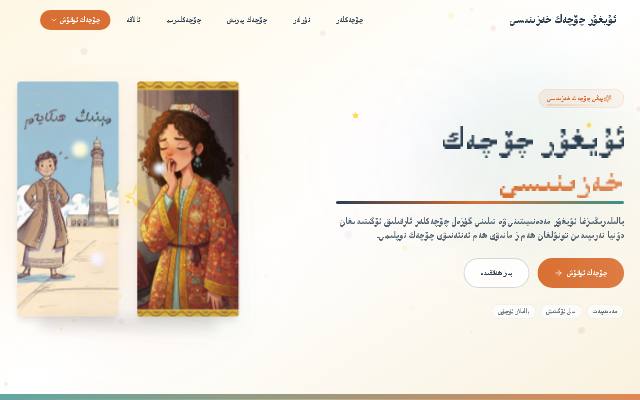
Fairy Tale Treasury (Chöchek) is a collection of Uyghur folk tales and stories for children. Pick tales by category — such as folk tales, Ependi stories, animals and bedtime — or by age, and there is also an AI tool for writing new tales.
What is it used for?
Hearing and reading tales enriches children's mother tongue and carries the culture from one generation to the next. Having the folk tales in one place makes bedtime reading easier for parents.
How is it used?
On the stories page, choose a tale by category or age and read it; you can rate the tales you like and leave a comment. In the tale writer on the home page, choose a story type and characters and let AI write a new tale — this needs your own OpenAI, xAI or Anthropic API key.
Who is it for?
Children, parents, teachers and anyone interested in writing tales in Uyghur.
Getting started
- Choose a tale by category or age on the stories page.
- Read the tale and rate it if you like it.
- To have a new tale written, choose a story type and characters in the tale writer on the home page.
- Save, download or print the tale that was written.
Frequently asked questions
- Is the AI tale writer free?
- The tool itself is free, but it runs on your own OpenAI, xAI or Anthropic API key, and that service charges for the writing. Your key is stored only in your browser.
- Where are my tales and comments stored?
- Saved tales, ratings and comments are kept in your own browser, so other people don't see them.
Also known as
- چۆچەكلەر خەزىنىسى
- Chöchekler xezinisi
- Чөчәкләр хәзиниси
- Fairy Tale Treasury
- ئۇيغۇر چۆچەكلىرى
- بالىلار چۆچىكى
- Uyghur chöchekliri
- Uyghur folk tales
- Uyghur stories for kids
Related articles
Prompt Engineering — Complete Guide
Complete guide to prompt design, few-shot prompting, system prompts, structured output, evaluation, and safety for LLMs
AIHow to Prompt in Uyghur
A Uyghur prompt needs a task, a language, and a shape. Keep the English term the first time, and do not trust a smooth sentence